
tempered glass cut to size
Understanding Differential Gauge A Comprehensive Overview A differential gauge is a vital instrument commonly used in various industrial applications, measuring the difference in pressure between two points in a system. This pragmatic device plays a crucial role in ensuring operational efficiency, safety, and optimal performance across numerous sectors, including manufacturing, HVAC (heating, ventilation, and air conditioning), and automotive industries. At its core, a differential gauge works by comparing two separate pressure inputs and displaying the difference on a calibrated scale. This functionality makes it especially useful for applications that require precise pressure management, such as monitoring fluid flow in pipelines, assessing air pressure in pneumatic systems, or evaluating the performance of filters and other equipment that may cause pressure drops. The construction of a differential gauge typically features a set of two pressure ports, enabling it to receive inputs from two distinct points. These ports are connected to a sensing element, usually a diaphragm or a Bourdon tube . When pressure is applied to the sensing element, it deforms in response to the pressure differential between the two ports. This deformation is then translated into a mechanical movement that drives an indicating needle or activates a digital display, showcasing the differential pressure values. differential gauge One of the pivotal advantages of differential gauges is their ability to detect minor pressure differences that might go unnoticed with a standard gauge. This capability is crucial in various systems, such as monitoring filter performance where even slight changes can indicate a blockage or degradation in filter efficiency. Consequently, utilizing a differential gauge allows for proactive maintenance and timely interventions, minimizing system downtime and extending equipment lifespan. In addition to industrial applications, differential gauges are instrumental in laboratory settings, such as in scientific research and development. Here, they assist researchers in applying precise pressure differentials to conduct experiments that require stringent control over environmental conditions. Similarly, in the semiconductor manufacturing process, differential gauges help ensure that pressure differentials within fabrication equipment remain within specified limits for optimal product quality. Differential gauges come in various types, including mechanical and electronic versions. Mechanical differential gauges utilize traditional dial and needle mechanisms, while electronic variants often come equipped with digital displays and advanced features like data logging and wireless connectivity. This evolution in technology has enhanced the accuracy and functionality of these instruments, making them increasingly user-friendly and versatile. In summary, differential gauges are indispensable tools in modern industrial and laboratory environments. By accurately measuring pressure differentials, they enable operators to monitor systems effectively, identify potential issues early, and ensure optimal functioning of equipment. As industries continue to advance and evolve, the importance of precision measurement instruments like differential gauges will only grow, cementing their value in ensuring safety, efficiency, and reliability across various applications. Whether in a factory, laboratory, or HVAC system, the differential gauge remains a key component in the pursuit of excellence and productivity.
about
tempered glass cut to size
In the domain of industrial metrology and manufacturing quality assurance, ring thread gauges and snap gauge represent cornerstone instruments for achieving and verifying dimensional precision. These tools embody the technical rigor required to meet international standards where tolerance compliance is non-negotiable. This scholarly discourse examines their operational principles, engineering applications, and scientific foundations, underscoring their indispensable role in modern industrial ecosystems. The Mechanical Design and Functional Utility of Ring Thread Gauges Ring thread gauges are engineered to evaluate the geometric integrity of external threads through comparative measurement. Constructed from high-grade alloy steels with high surface hardness, these gauges feature precision-machined internal threads that conform to standardized profiles.Critical to their utility is the principle that gauges verify both the maximum material condition and the virtual condition of threads. In aerospace fastener production, for example, ring thread gauges ensure that alloy bolts adhere to strict tolerances, preventing catastrophic failures due to thread misalignment. Metrological best practices dictate periodic calibration against master thread rings traceable to national standards, ensuring measurement uncertainty remains within acceptable limits for nominal diameters. Telescoping Bore Gauge A Kinematic Solution for Complex Internal Geometry Measurement The telescoping bore gauge addresses the metrological challenge of measuring inaccessible internal diameters through a kinematic linkage mechanism. Comprising extendable probes with spherical contact tips and a central beam, this device operates on the principle of three-point measurement, where fixed anvils and an adjustable probe triangulate the bore's diameter. When paired with a dial indicator or electronic comparator, it achieves high measurement resolutions, as outlined in standards for geometric product specifications. Its utility is particularly pronounced in automotive cylinder block inspection, where deep bores necessitate tools with minimal form error. The gauge's articulated design mitigates errors by ensuring axial alignment with the bore axis, a critical factor in maintaining measurement validity. Research in precision engineering has demonstrated that proper probe lubrication reduces frictional forces, enhancing repeatability across controlled temperature ranges. Bore Gauge Micrometer Nanometric Precision in Dimensional Metrology The bore gauge micrometer represents the pinnacle of precision in internal diameter measurement, combining the screw-thread mechanism of a micrometer with a dual-anvil design optimized for bore inspection. Equipped with a thimble graduated in fine increments and a carbide-tipped spindle, this instrument achieves exceptional measurement uncertainty when used in controlled environments, as per relevant standards. Its application in medical device manufacturing is transformative, enabling verification of component bores that must adhere to extremely tight tolerances to ensure proper functionality. The instrument's thermal stability, achieved through specialized alloy components, minimizes errors induced by ambient temperature fluctuations. Metrological protocols emphasize the use of multi-point averaging around the bore to compensate for ovality, a practice codified in established metrological guidelines. Snap Gauge A Statistical Process Control Enabler for High-Volume Production Designed for attribute sampling in statistical process control, the snap gauge facilitates rapid conformity assessment of cylindrical components through fixed-limit gauging. Constructed with hardened steel anvils set to specified tolerance limits, it operates on the principle of gauge block comparability, ensuring consistency with recognized standards. The "snap" action defined by a controlled force threshold for engagement—eliminates subjective interpretation, making it ideal for automated inspection lines. In automotive power train production, snap gauges validate the diameter of critical components to within strict tolerances, supporting efficient quality control objectives by reducing inspection cycle times. Ergonomic designs with anti-slip grips and balanced leverage systems enhance operator efficiency, while durable surface treatments resist wear from extensive measurement cycles. Calibration protocols require periodic verification against master standards traceable to national measurement institutes, ensuring gauge reliability. Ring T hread G auges FAQs How do ring thread gauges ensure compliance in aerospace fastener manufacturing? Ring thread gauges play a pivotal role in aerospace fastener manufacturing by verifying the geometric integrity of external threads on critical components. These gauges methodology to ensure that alloy bolts and screws adhere to stringent tolerances, preventing assembly failures caused by thread misalignment. By conforming to standardized thread profiles and undergoing regular calibration, ring thread gauges maintain the precision required for aerospace applications, where component reliability is non-negotiable. How does kinematic design enhance the accuracy of telescoping bore gauges? The three-point kinematic design of telescoping bore gauges constrains rotational freedom, ensuring the measured diameter aligns with the bore's principal axis. This reduces the influence of form errors, as demonstrated in studies published in leading metrological journals. What materials science considerations optimize bore gauge micrometer performance? Bore gauge micrometers utilize specialized alloys for thermal stability and wear-resistant materials for contact tips. These materials ensure dimensional stability across operational temperatures and maintain measurement accuracy over extended service life. How do snap gauges contribute to statistical process control methodologies? Snap gauges enable attribute data collection, which are critical for constructing control charts in statistical process control. Their binary output supports real-time process monitoring, facilitating timely corrective actions to maintain high process capability. What is the metrological significance of calibration intervals for precision gauges? Calibration intervals balance measurement risk and operational cost. For ring thread gauges and snap gauges , regular calibration suffices under normal conditions, while telescoping bore gauge in high-precision environments may require more frequent checks to mitigate drift and environmental influences. The instruments discussed herein ring thread gauges and snap gauge —embody the intersection of mechanical engineering, metrology, and materials science. Their design adheres to fundamental geometric principles, standardized protocols, and empirical best practices, enabling industries to achieve precision levels that underpin modern technological advancement. As manufacturing tolerances continue to tighten, driven by trends like miniaturization, the scientific rigor inherent in these tools remains essential for maintaining global quality benchmarks. This academic exploration dissects two critical precision measuring tools in industrial settings. Ring thread gauges ensure thread conformity through comparative assessment, and snap gauges enable efficient quality control in high-volume production. Collectively, these tools exemplify the technical excellence required to meet international standards, underscoring their pivotal role in dimensional accuracy and process reliability.
-

High quality industrial productsagement

High quality industrial products
View Details -

Meet the diverse needs of customers

Meet the diverse needs of customers
View Details -

Strict quality control

Strict quality control
View Details -

Top raw materials

Top raw materials
View Details -

Trusted supplier

Trusted supplier
View Details
Our application


news and information
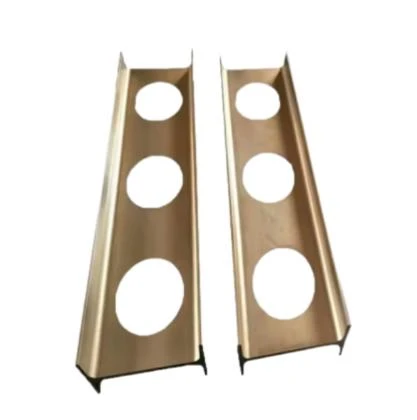
Using a Level for Accurate Measurements with a Marking Ruler
Using a Marking Ruler with Spirit Level A Guide to Precision in Projects When it comes to achieving
Water Gate Valve Pricing Guide for Affordable Options and Quality Choices
water gate valve price
water control valves types
Understanding Different Types of Water Control Valves Water control valves are crucial components in
 English